
Introduction
A strong digital presence has become a foundational element of patient trust in modern healthcare. Patients no longer form their first impressions inside the clinic—they form them online, long before any appointment is made. This guide explains how an updated online presence strengthens trust by shaping first impressions, influencing perceptions through reviews, and reinforcing credibility through consistent, evidence-based content. These components work together to help clinics communicate professionalism, reliability, and care across every digital touchpoint.
Research published in the Journal of Medical Internet Research shows that patients evaluate the credibility of healthcare providers almost instantly based on website design and clarity. Studies from Health Affairs also confirm that online reviews and digital reputation significantly affect patient choice. Understanding these dynamics enables clinics to refine their digital presence and align it with the quality of care they provide.
The Power of First Impressions in Healthcare
Why First Impressions Form Online
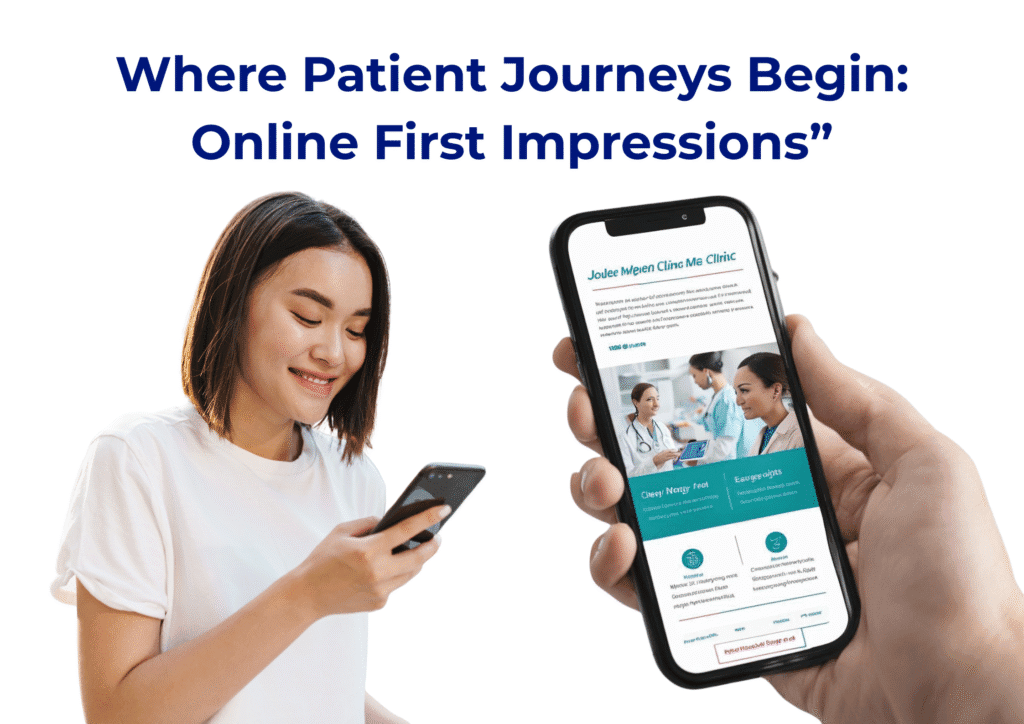
When patients begin searching for symptoms, specialty care, or nearby clinics, their first point of contact is usually digital. According to Pew Research, more than 70% of adults initiate their healthcare inquiries online. This reality means your website and social profiles serve as the primary gateway to your clinic.
People form quick judgments based on what they see online, even before they read anything. If your website looks messy or outdated, patients might think your clinic is the same way.
How Website Design Signals Professionalism
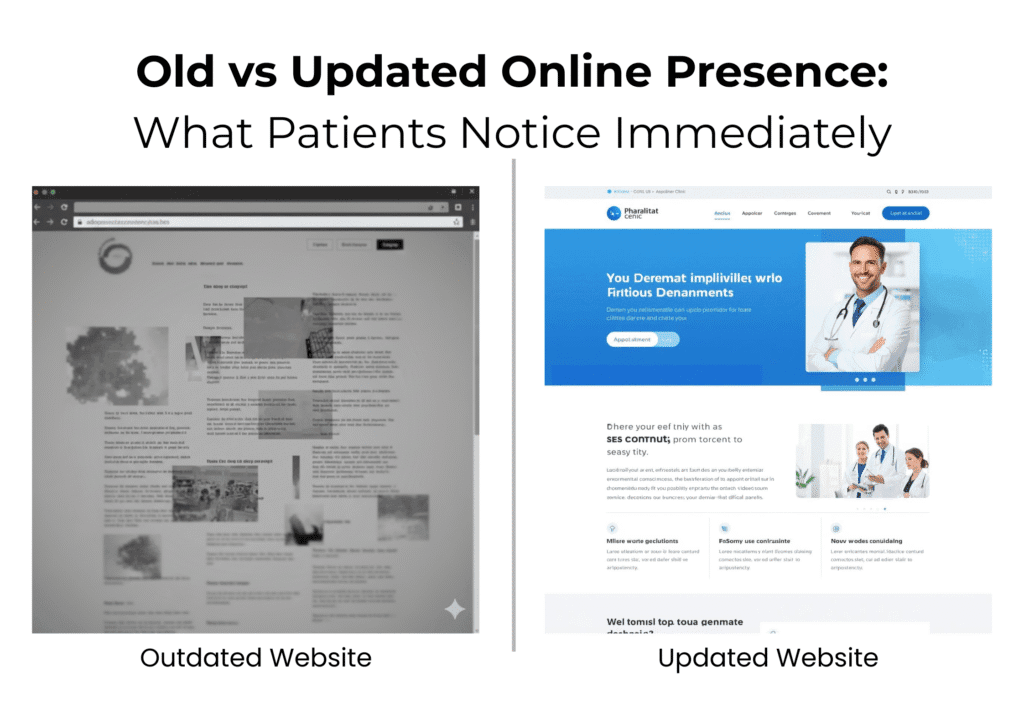
A clean, modern, well-structured website communicates:
- Professional competence – Patients associate clean design with accurate, high-quality clinical care.
- Operational efficiency – Organized layouts imply streamlined internal processes.
- Commitment to patient care – Clear, readable information signals a patient-first approach.
- Adherence to contemporary medical standards – Updated visuals show your clinic stays current.
- Stability and reliability – Consistency in design reflects consistent service delivery.
In contrast, an outdated design can signal disorganization, outdated practices, or insufficient attention to detail. Because patients treat your website as a reflection of your clinic, these impressions influence whether they choose to engage or look elsewhere.
Mobile Optimization: The New Standard
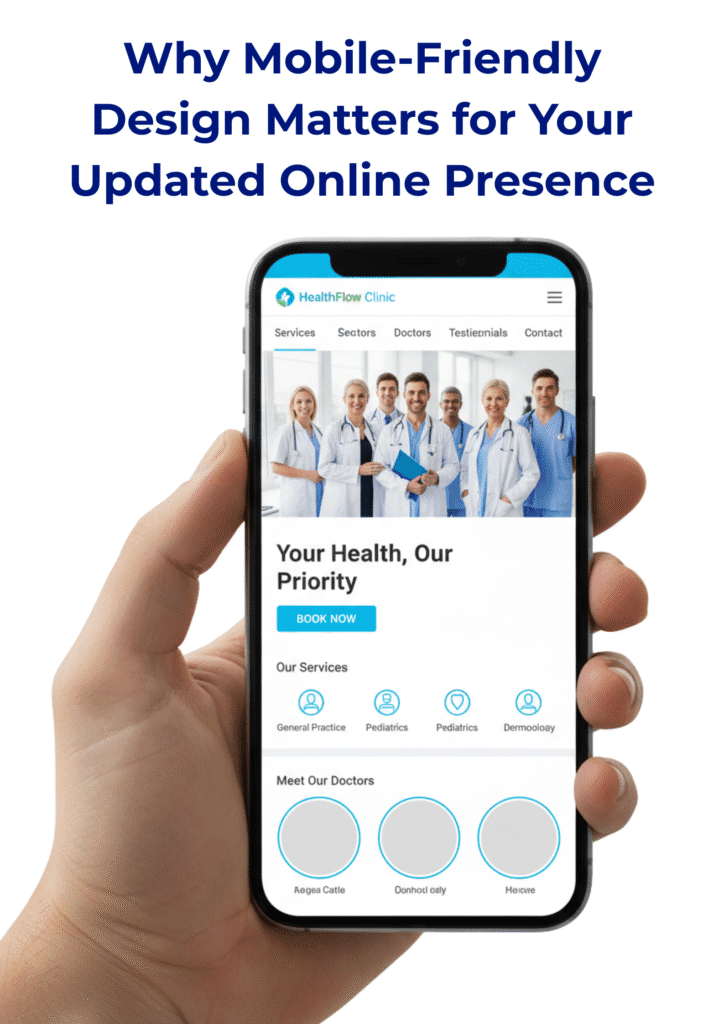
With over half of healthcare-related searches occurring on mobile devices, mobile optimization is essential. Google’s data indicates that 61% of users avoid returning to websites that perform poorly on mobile, and 40% immediately turn to a competitor.
An updated online presence makes sure your website and social pages work smoothly and are easy for anyone to use. This includes:
- Fast-loading under various connection speeds – Reduces user frustration and keeps patients engaged.
- Mobile-responsive and visually coherent – Ensures readability and usability on any device.
- Simple and intuitive to navigate – Helps patients find what they need without confusion.
- Clear in action pathways – Buttons for booking, calling, or messaging are easy to spot.
Even minor improvements—streamlined forms, mobile-friendly buttons, responsive layouts—significantly influence comfort and trust.
How Online Reviews Shape Patient Perception
Digital Reviews as Modern Social Proof
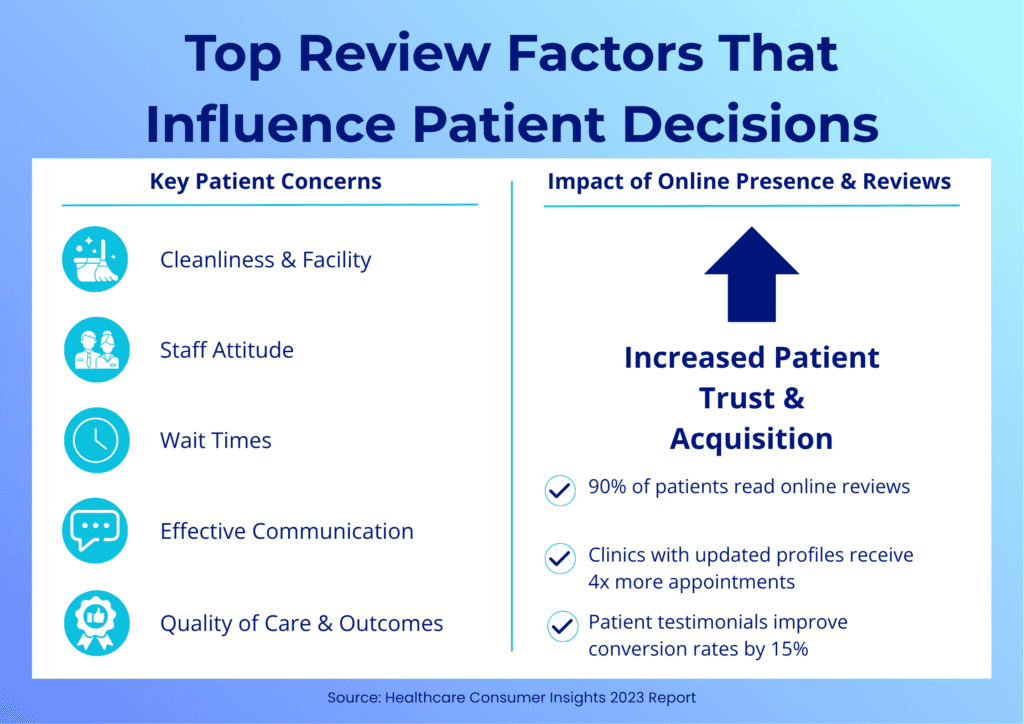
Online reviews now function as the digital equivalent of word-of-mouth. BrightLocal’s research shows that 87% of consumers read online reviews for local businesses, including healthcare providers. These reviews help patients assess:
- Provider trustworthiness – Whether the doctor seems competent and dependable.
- Quality of staff interactions – Friendliness, professionalism, and courtesy.
- Cleanliness and environment of the clinic – An important factor in patient comfort.
- Wait times and efficiency – Delays or quick service impact satisfaction.
- Clarity and consistency of communication – Whether instructions and explanations are clear.
- Overall care experience – A summary of how patients feel treated throughout their visit.
The Role of Positive Reviews in Trust-Building
Well-managed online reviews offer:
- Authentic patient experiences
- Social proof validating your services
- Evidence of consistent care quality
- A track record of transparency and accountability
Clinics with an updated online presence proactively request reviews, maintain complete Google Business Profiles, and implement structured systems to gather and analyze feedback.
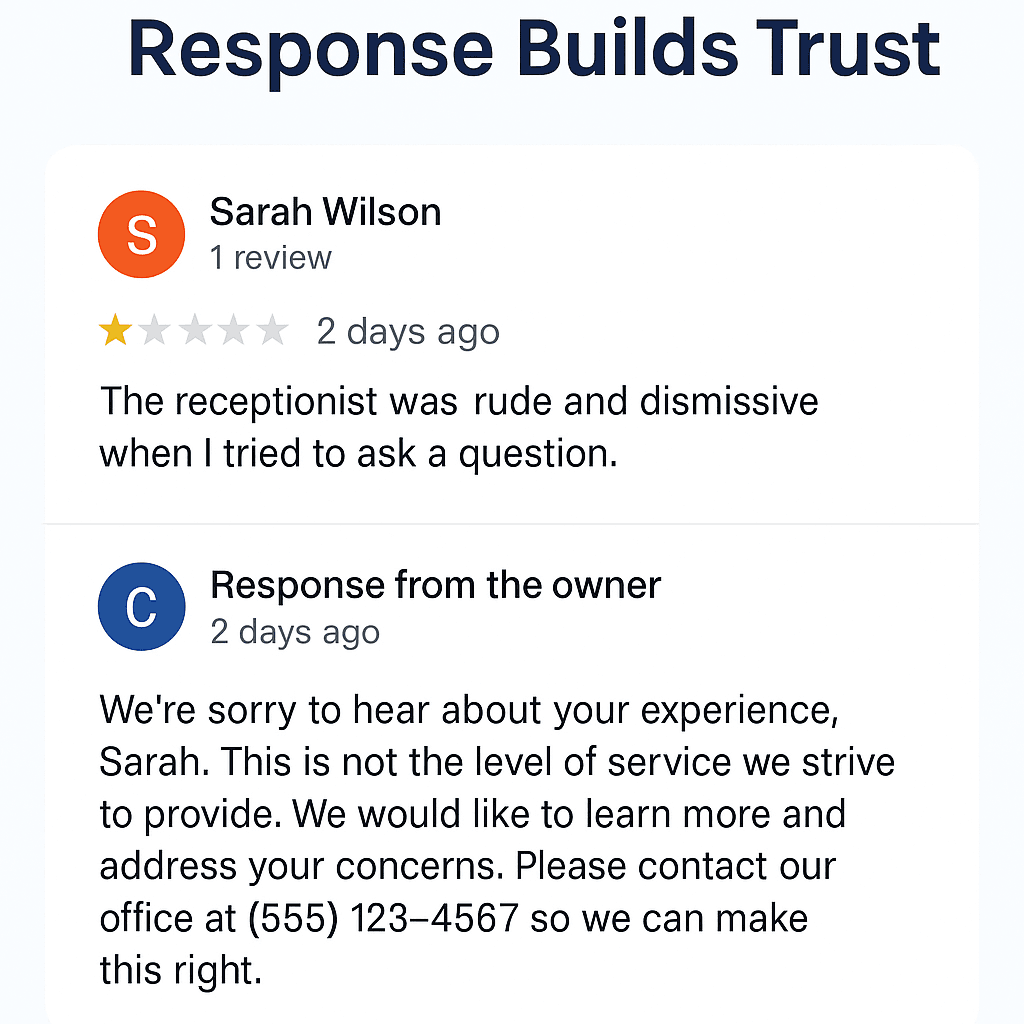
Effective Responses to Negative Feedback
Negative reviews are inevitable, but they do not inherently damage trust. What matters is how your clinic responds.
A professional review-response strategy includes:
- Acknowledging the concern with empathy – Validates the patient’s feelings.
- Thanking the patient for their feedback – Encourages open communication.
- Offering a respectful resolution pathway – Shows willingness to improve.
- Moving sensitive or complex conversations offline – Protects privacy and ensures proper follow-up.
Prospective patients often view responsive clinics as caring and engaged—even when reviews include criticism.
Content Consistency: The Hidden Foundation of Trust
Why Consistency Matters
Healthcare interactions require stability and predictability. When your digital content is inconsistent—outdated information, irregular posting, or mixed branding—patients may question your organizational coherence.
A consistent, updated online presence helps patients feel confident that your clinic is:
- Well-organized
- Actively operating
- Clear in communication
- Reliable in its processes
Elements of Consistent Healthcare Content
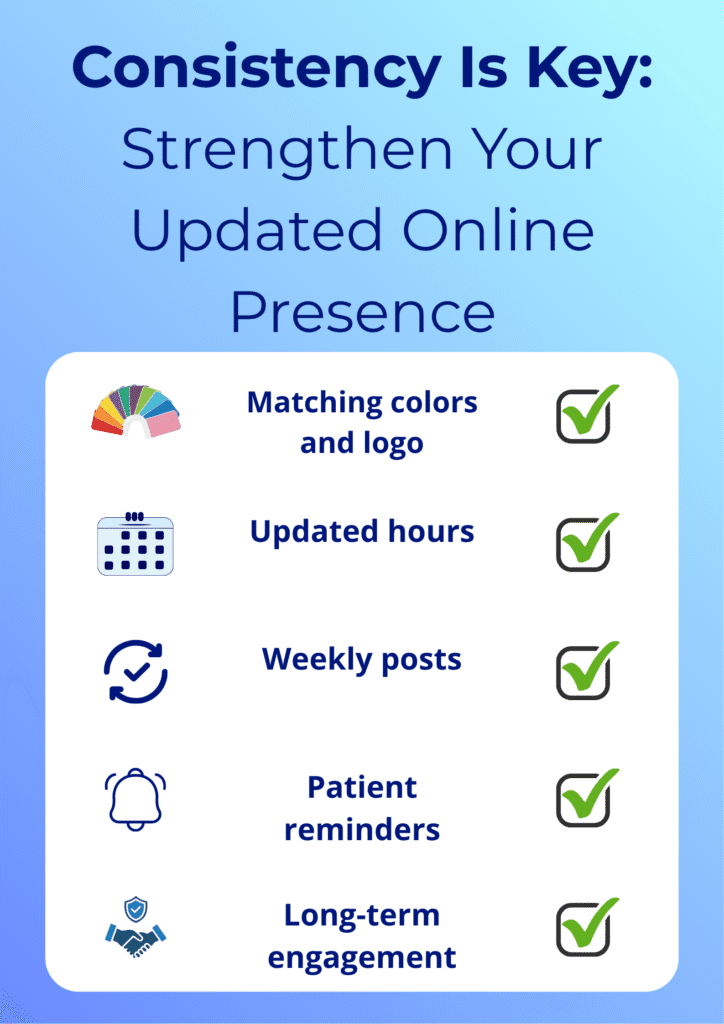
An updated online presence includes:
- Cohesive branding (colors, fonts, tone) – Creates familiarity and reinforces professionalism.
- Accurate hours, contact information, and service lists – Prevents confusion and frustration.
- Regular posting schedules – Shows active management and ongoing patient engagement.
- Evidence-based educational materials – Builds authority and helps patients make informed decisions.
The Strength of Educational Content
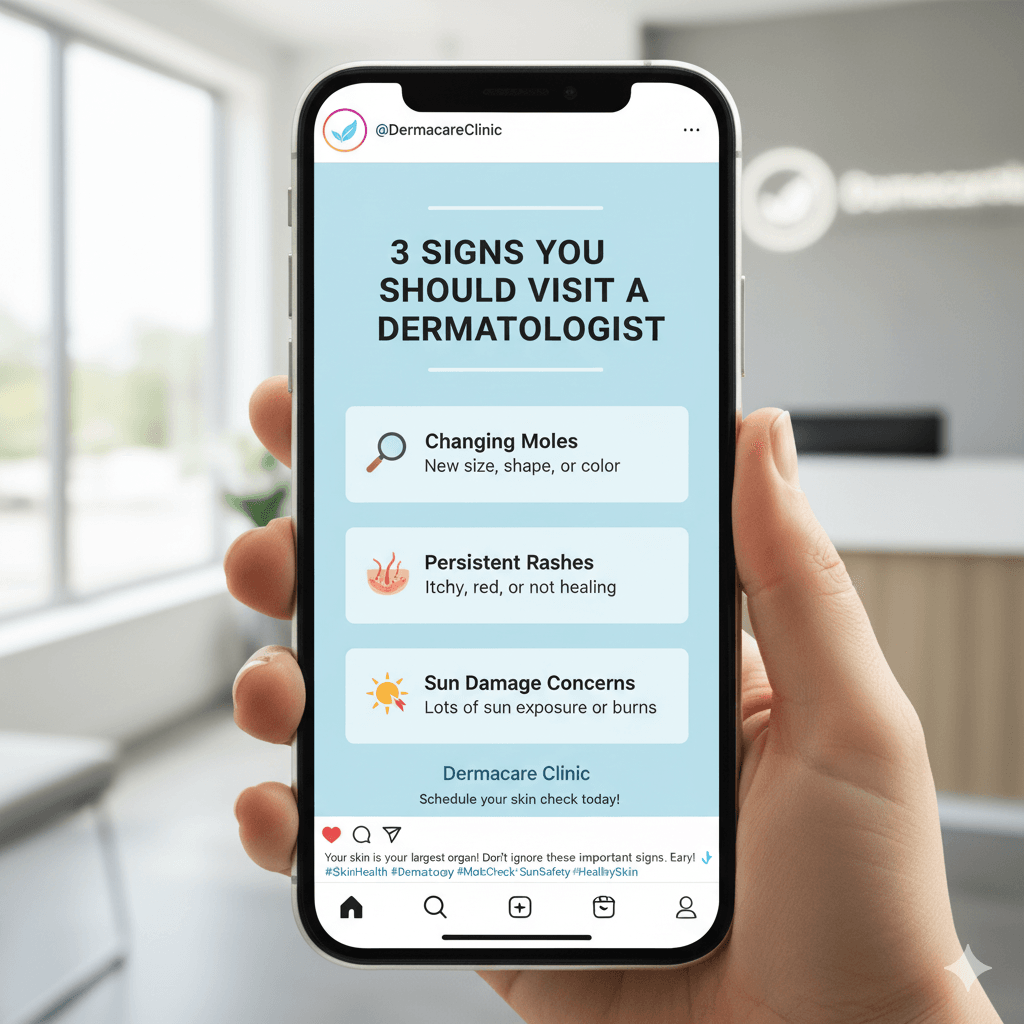
Educational content is a powerful trust-building tool. Explainers about symptoms, treatment options, preventive steps, or appointment preparations help patients feel informed and supported.
Examples include:
- “Recognizing Early Signs of Diabetes”
- “How to Prepare for a Dermatology Appointment”
- “Understanding Ultrasound Results: A Patient’s Guide”
These posts demonstrate expertise and position your clinic as a reliable, accessible health resource.
Humanizing the Clinic Through Storytelling
Authentic, human-centered content strengthens trust. Sharing:
- Patient stories (with consent)
- Physician profiles
- Staff introductions
- Behind-the-scenes clinic processes
- Community involvement activities
creates emotional resonance and reinforces your clinic’s credibility.
The Role of Speed, Security, and Accessibility
Before exploring technical components, it is important to understand their impact: patients interpret fast, secure, accessible digital experiences as markers of your clinic’s professionalism and respect for their well-being.
Site Speed: A Practical Trust Indicator
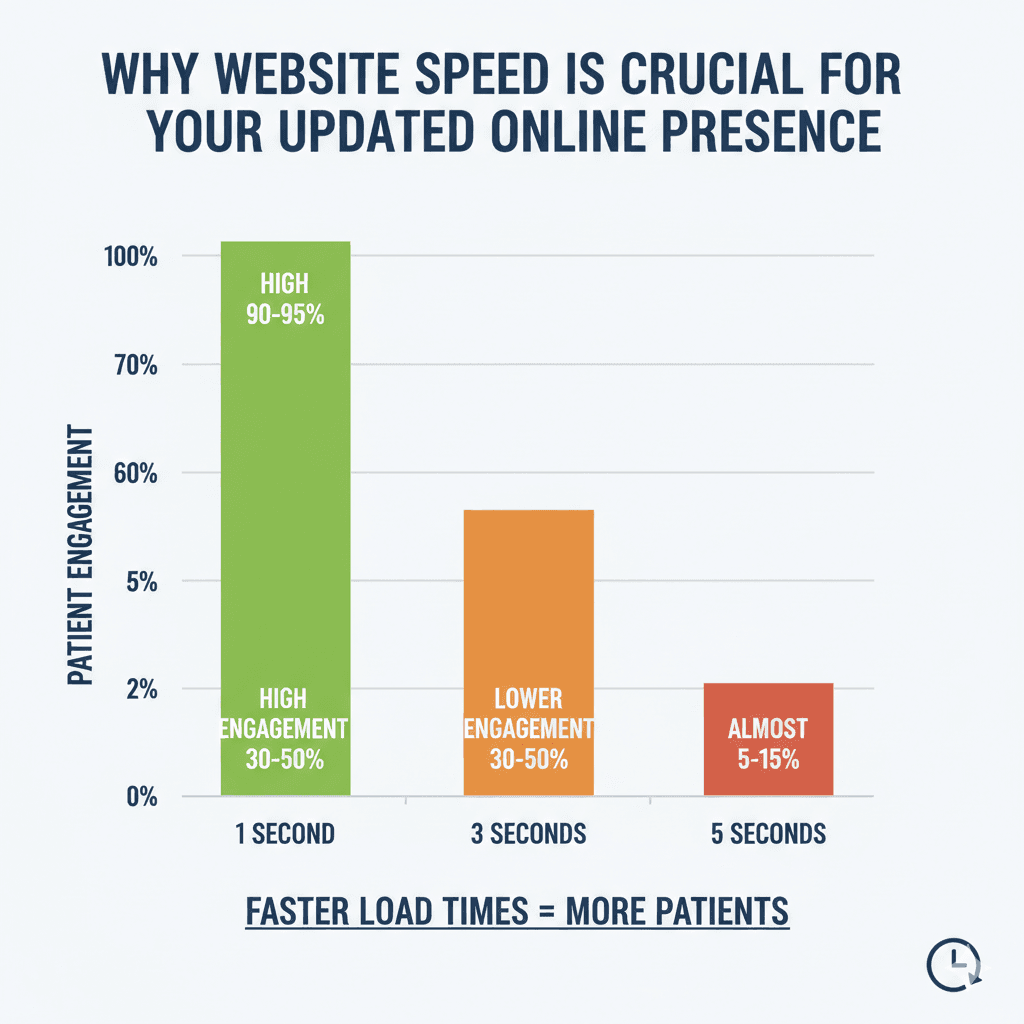
Akamai’s research reveals that every additional second of load time can reduce conversion rates by up to 20%. Slow sites create frustration, which patients may generalize to your clinic’s efficiency.
Fast-loading sites:
- Reduce abandonment
- Increase engagement
- Improve booking rates
- Reinforce competence
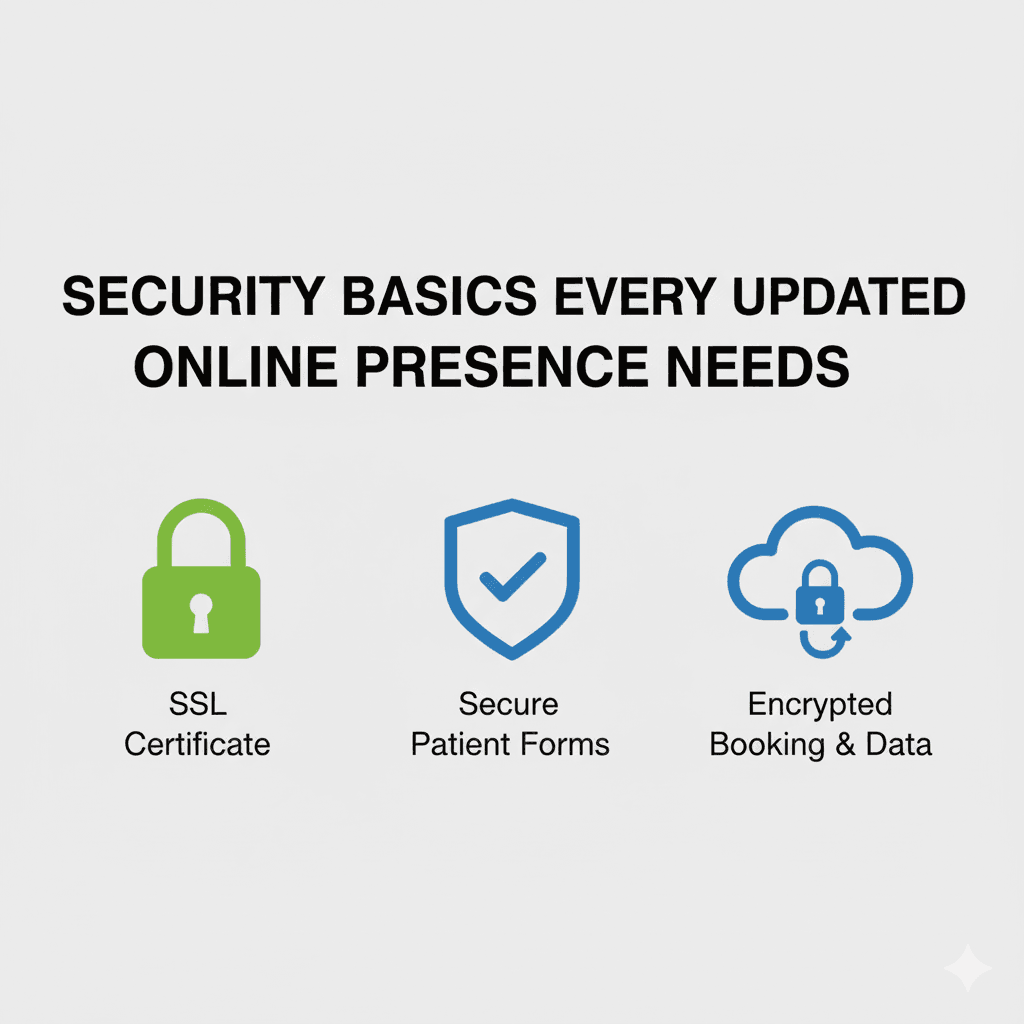
Security: Protecting Patient Information
Patients expect secure digital environments. An updated online presence includes:
- SSL encryption (the basic lock symbol that shows a website is safe to browse)
- Secure forms and portals (safe places for patients to send their information)
- Encrypted booking platforms (protected systems for scheduling appointments)
- Regular software updates
Without these protections, patients may fear data breaches or improper handling of sensitive information—concerns that severely erode trust.
Accessibility: Designing for All Patients
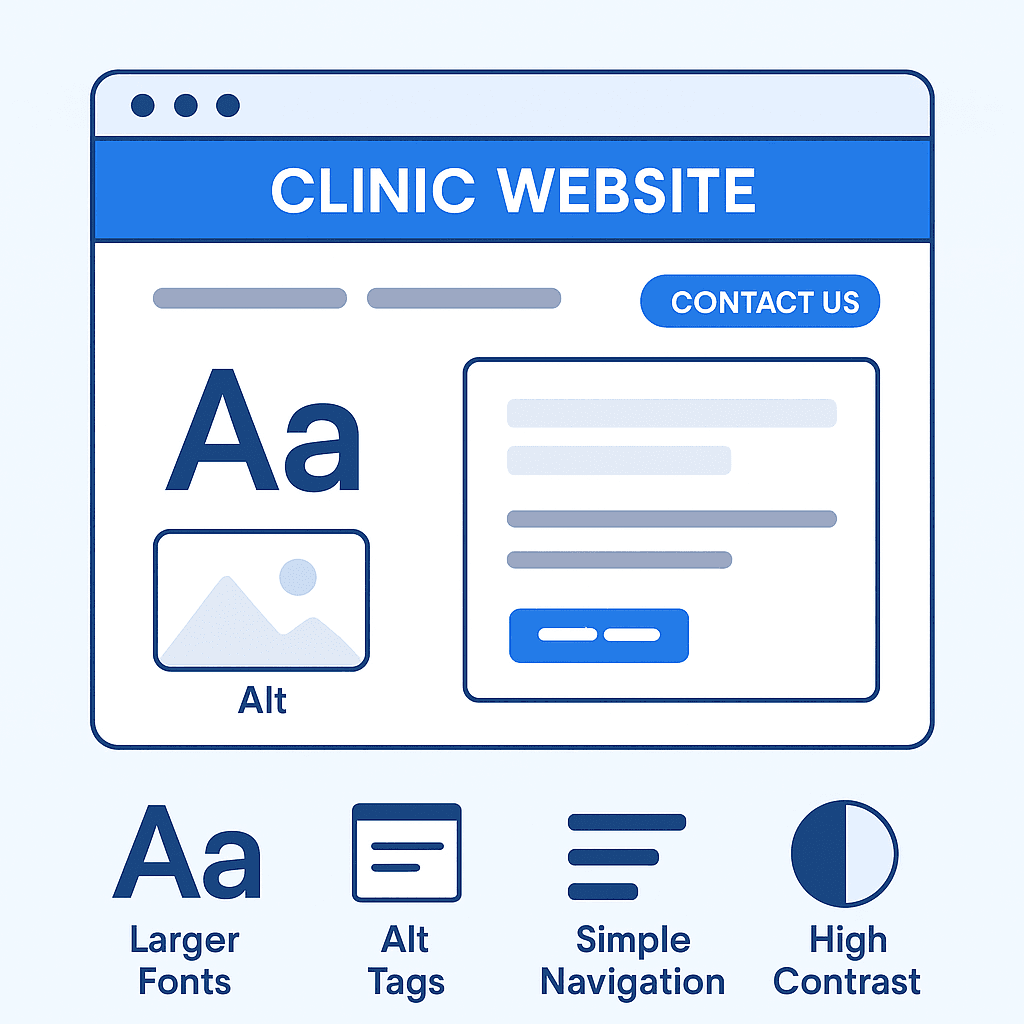
Accessible design reflects a clinic’s commitment to patient-centered care. A fully updated online presence accommodates:
- Individuals with visual impairments
- Older adults with reduced dexterity or cognition
- Users with mobility challenges
- Patients for whom English is not a first language
Accessibility features—proper contrast, readable fonts, alt text, simple navigation—signal inclusivity and respect.
Listen to the Article
Why an Updated Online Presence Is a Competitive Advantage
Expanding Competition in Healthcare
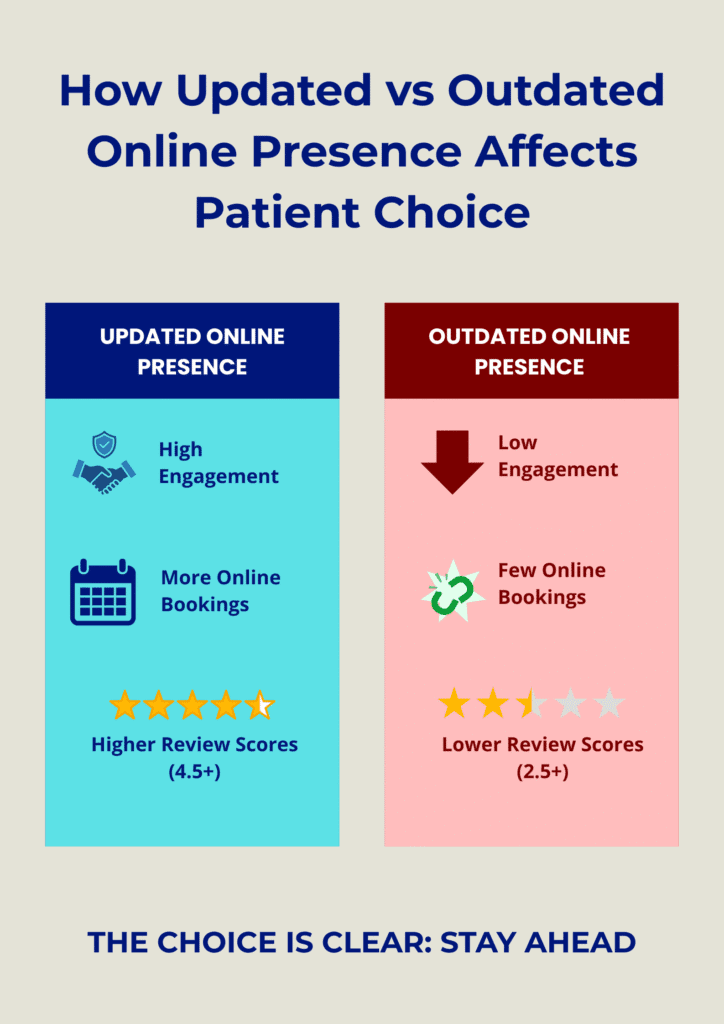
Healthcare competition is no longer restricted by geography. Telehealth, online consultations, and digital communication tools broaden patient options. Clinics with updated online presence naturally attract more patients because they appear modern, responsive, and reliable.
Increased Expectations for Transparency
Patients expect real-time updates on services, hours, policies, and safety protocols. Inconsistent or outdated information harms trust, especially during time-sensitive or critical situations.
Comparison Is Inevitable
Patients routinely compare:
- Website quality and usability
- Social media activity
- Online reviews
- Educational resources
- Booking convenience
Clinics with an updated online presence consistently outperform those with outdated or inconsistent digital identities.
Practical Steps to Improve Your Online Presence
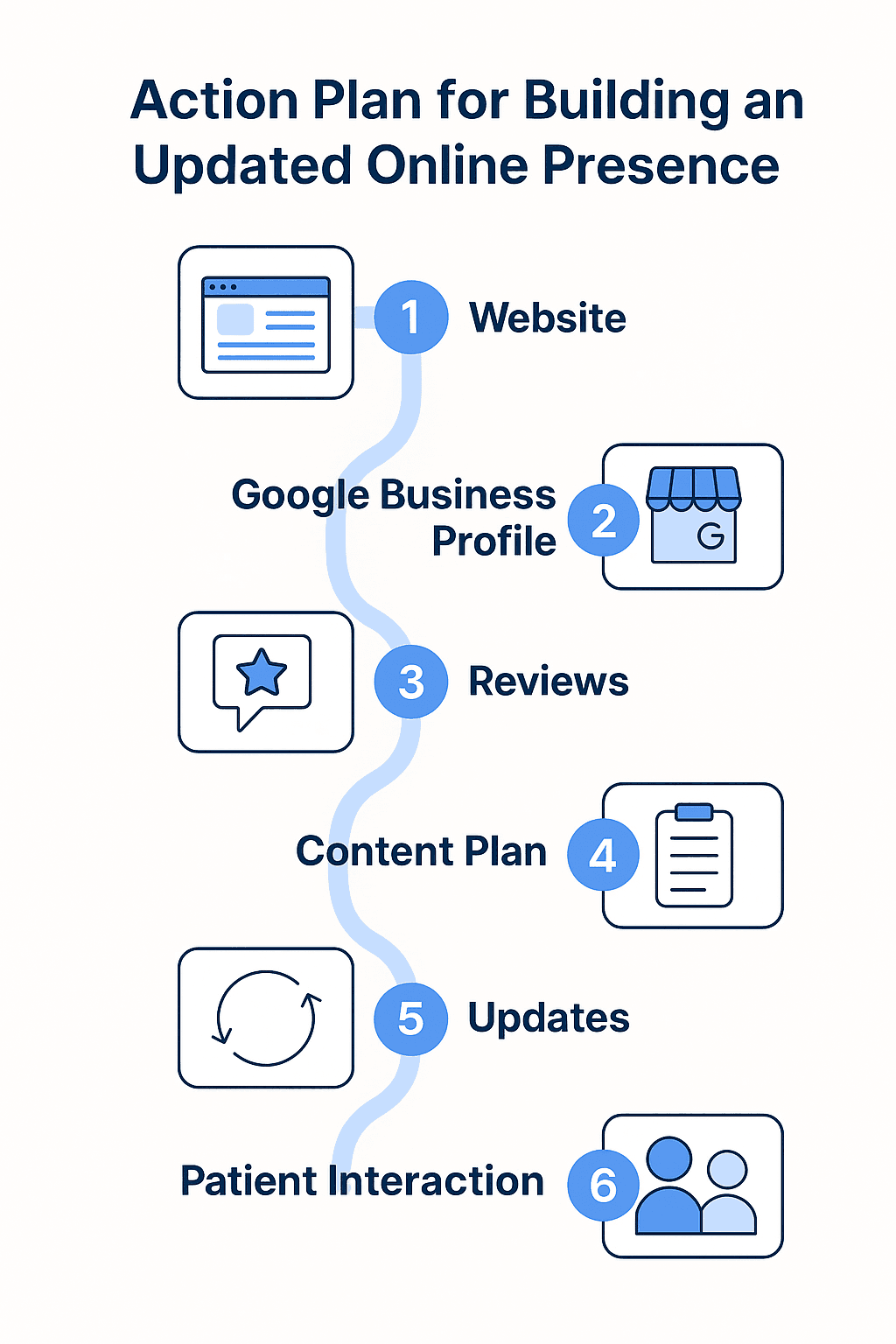
1. Modernize Your Website
Prioritize:
- Clean, structured design
- Mobile responsiveness
- Clear service breakdowns
- Prominent contact details
- Fast load speeds
- Visible, intuitive calls to action
2. Optimize Your Google Business Profile
Ensure accuracy in:
- Hours and location
- Services offered
- Photos and media
- Patient Q&A
- Weekly updates or posts
3. Build a Review Strategy
Develop a consistent system for requesting reviews from:
- Satisfied patients
- Follow-up visits
- Families and caregivers
Automation tools can simplify this process.
4. Maintain a Consistent Content Plan
Include:
- Weekly educational posts
- Monthly doctor spotlights
- Seasonal health campaigns
- Clinic updates and announcements
5. Keep All Information Updated
Outdated contact details, hours, or pricing immediately reduce trust. Update platforms regularly.
6. Respond Actively and Professionally
Monitor and respond to:
- Comments
- Direct messages
- Reviews
Engaging with empathy and clarity reinforces your clinic’s commitment to patient care.
Conclusion: Trust Begins Online
A patient’s trust often begins long before their first clinic visit—it begins the moment they interact with your updated online presence. A modern digital clinic conveys professionalism, compassion, organization, and competence.
Investing in your online presence strengthens patient confidence, enhances satisfaction,
References
- Journal of Medical Internet Research
- Stanford Web Credibility Research
- Nielsen Norman Group – First Impressions
- Pew Research Center – Health Online
- Google Think Insights – Patient Digital Journey
- Google Mobile Site Design
- Statista – Mobile Search Share
- HubSpot – Mobile Optimization Stats
- Akamai Research on Conversion & Speed
- Google PageSpeed
- BrightLocal – Local Consumer Review Survey
- Health Affairs – Online Reviews
- Software Advice – Patient Review Survey
- Google – Why HTTPS Matters
- HHS Cybersecurity Essentials
- WCAG Accessibility Standards
- ADA Web Accessibility Guidance
See how your clinic appears to patients online — and start building digital trust today.
Book Your Free Online Presence Health Check
Your clinic’s online presence shapes how patients perceive your care.
Let’s review your website, social media, and digital visibility —
and identify how you can build stronger patient trust before year-end.