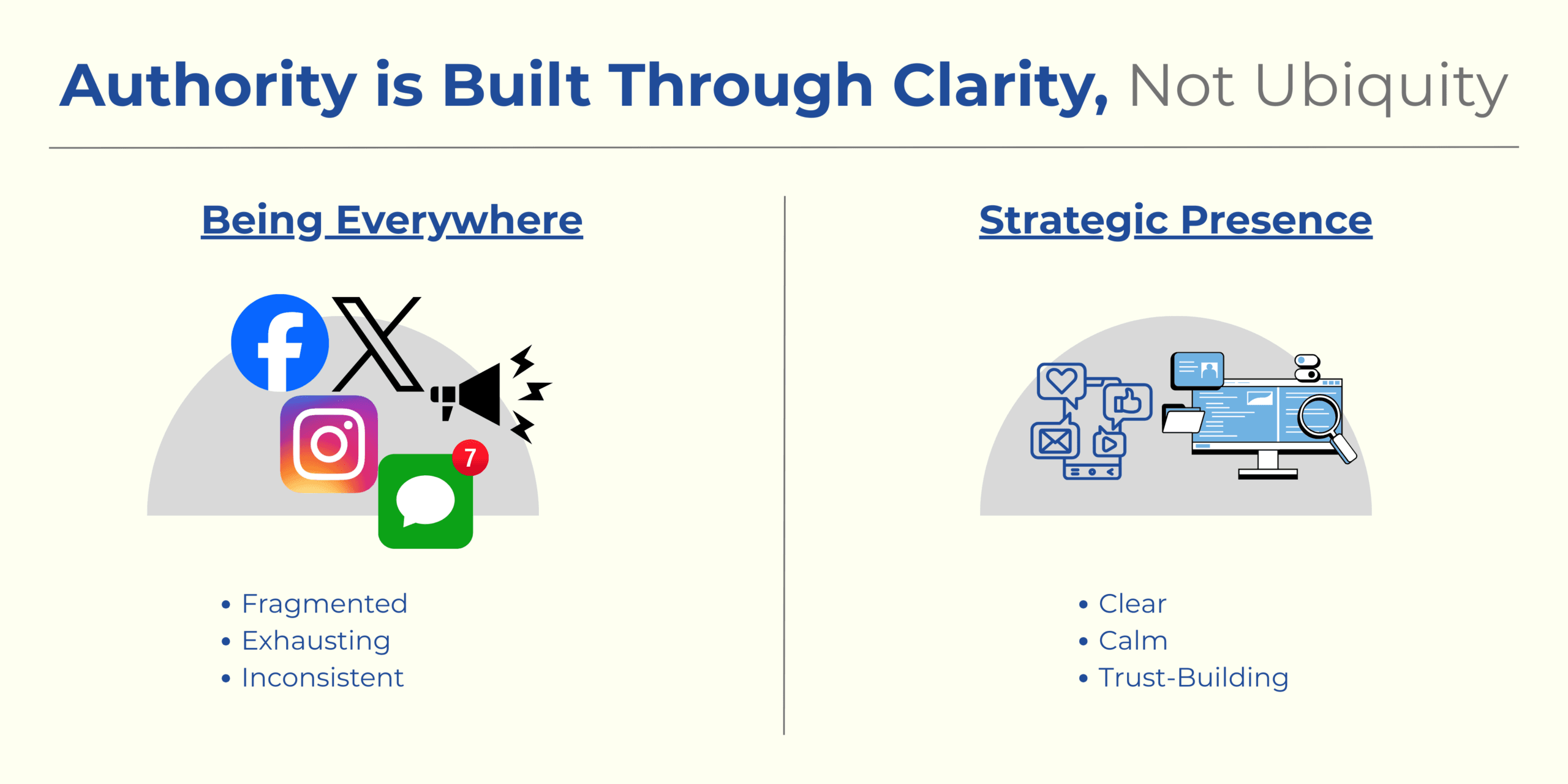

Introduction: Why 2026 Is a Defining Year for Healthcare & Wellness Brands
The 2026 digital presence for healthcare and wellness professionals is being reshaped by rapidly evolving standards of trust, transparency, and regulatory accountability. By late 2024, a growing number of small and mid-sized healthcare practices began to experience a measurable decline in digital visibility and patient inquiries. This contraction was not attributable to diminished clinical quality or service availability, but rather to a misalignment between existing digital assets and rapidly evolving standards of trust, transparency, and compliance. Content published without identifiable authorship, social media posts advancing generalized health claims without citation, and outdated or incomplete data privacy disclosures were increasingly deprioritized by search engines and social platforms. For many practitioners, this shift marked the first concrete indication that the epistemic, ethical, and regulatory expectations governing healthcare communication had fundamentally changed.
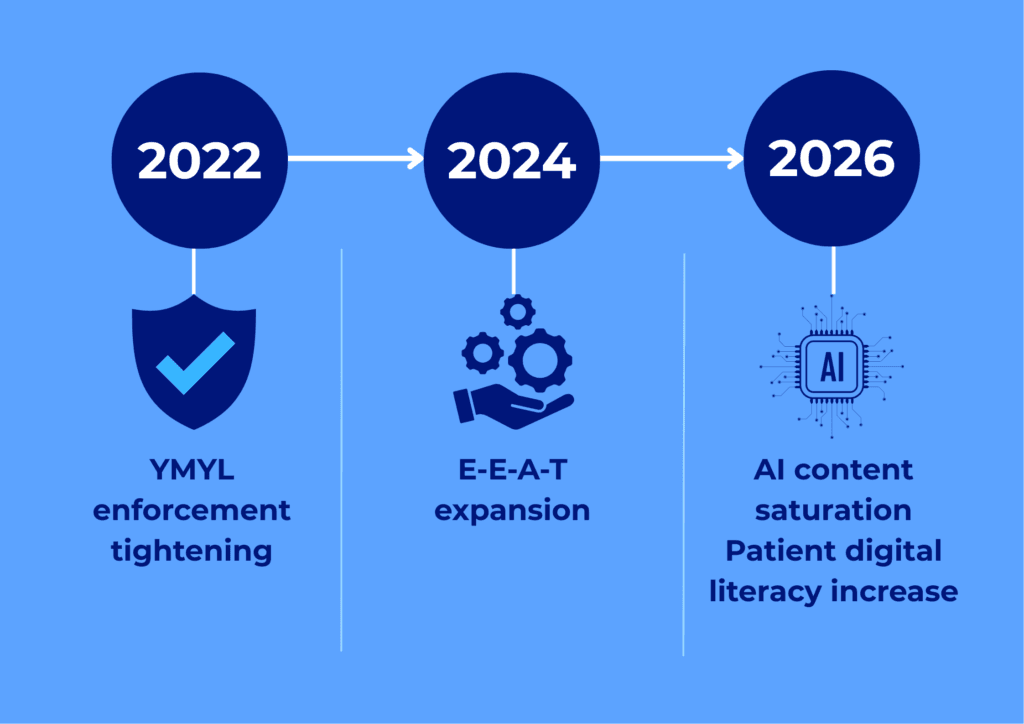
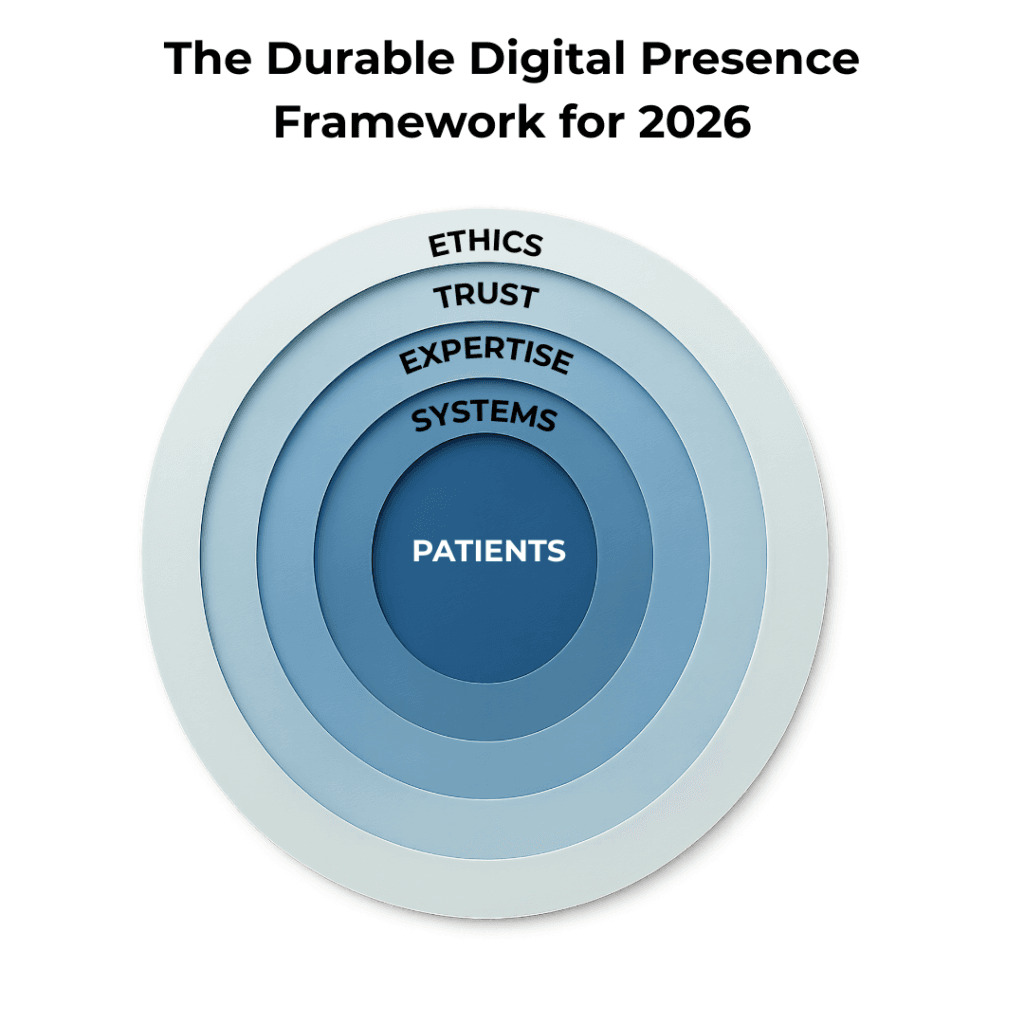
These developments underscored a critical reality: digital presence is no longer peripheral to professional credibility. It has become a functional extension of clinical authority itself. Contemporary patients do not encounter healthcare providers for the first time in consultation rooms; they encounter them through search results, websites, social feeds, and educational content. Within these environments, patients actively evaluate credibility, coherence, ethical posture, and expertise long before initiating direct contact.
As the sector approaches 2026, healthcare and wellness professionals face a convergence of structural forces that will irreversibly reshape how trust is established and sustained. Intensified algorithmic scrutiny, heightened regulatory expectations, the saturation of AI-generated content, and increasingly literate patient populations have collectively elevated the threshold for what constitutes a credible digital presence. The divergence between practitioners who adapt strategically and those who rely on legacy digital practices continues to widen.
In this context, digital presence is no longer synonymous with visibility. It denotes verifiable trustworthiness, demonstrable professional experience, and systematic alignment with the evaluative frameworks employed by search engines, social platforms, regulators, and patients alike.
This playbook articulates how to design a 2026 digital presence for healthcare and wellness professionals that is durable, ethically grounded, and growth-oriented, drawing upon established best practices, patient-centered communication principles, and forward-looking frameworks shaping the contemporary digital health ecosystem.
Section 1: The New Reality of Digital Trust in Healthcare (2026 and Beyond)
Within healthcare and wellness, trust is not a secondary attribute of the service offering; it is the service offering. The value patients derive from care is inseparable from their confidence in the accuracy, integrity, and accountability of the information that precedes and accompanies clinical interaction. In practice, the 2026 digital presence for healthcare and wellness professionals is now evaluated as an extension of professional accountability rather than a standalone marketing activity.
Search engines and major digital platforms have formalized this reality through the classification of healthcare-related content as “Your Money or Your Life” (YMYL). This designation reflects the potential for real-world harm arising from misinformation, exaggerated claims, or decontextualized advice. In response, platforms have implemented increasingly rigorous quality thresholds governing content visibility, distribution, and discoverability.
Several trust dynamics now shape the 2026 digital presence for healthcare and wellness professionals:
- Demonstrated expertise outweighs content volume and short-term virality
- Credentials, authorship transparency, and citations are subject to algorithmic evaluation
- Patient experience is assessed beyond clinical settings, encompassing digital interactions
- AI-generated content is evaluated for originality, depth, and substantive authority
- Transparency and accountability are privileged over promotional rhetoric
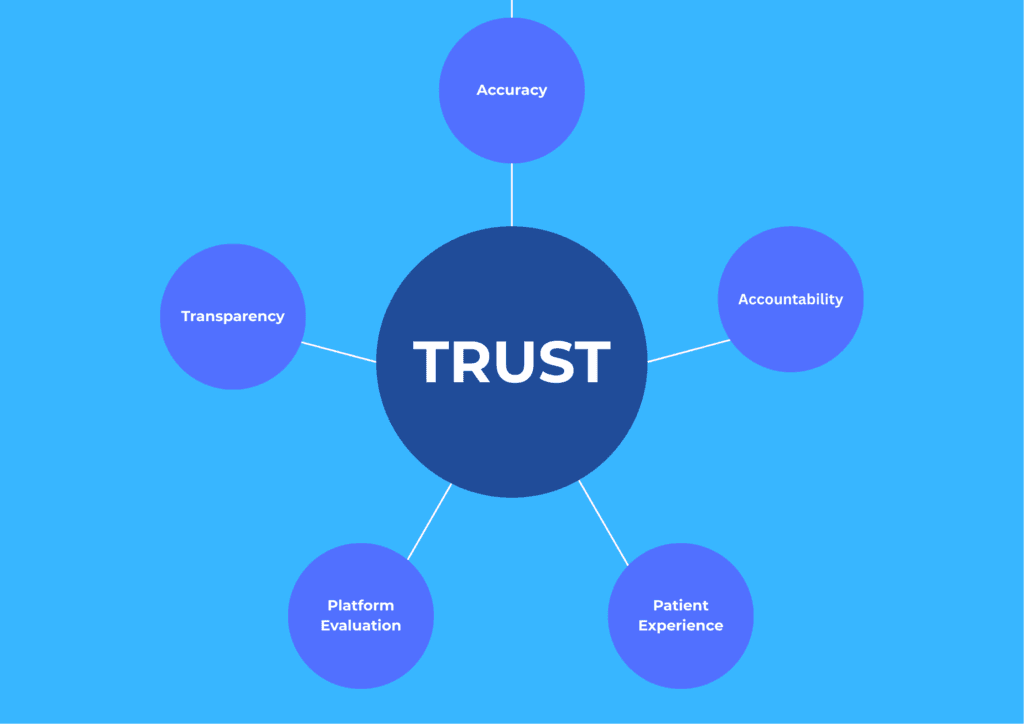
In practical terms, healthcare brands that depend on generic messaging, repurposed content, or unsubstantiated claims face declining reach, diminished search performance, and erosion of patient confidence. By contrast, practitioners who invest in clarity, documentation, and ethical communication are increasingly favored by both digital systems and patient audiences.
Section 2: E-E-A-T as the Non-Negotiable Foundation

Experience, Expertise, Authoritativeness, and Trustworthiness (E-E-A-T) has evolved beyond its origins as a search quality heuristic. It now functions as the operational substrate of any credible 2026 digital presence for healthcare and wellness professionals.
Experience
Professional experience must be rendered visible in ways that educate without compromising confidentiality. Anonymized case narratives, reflective practice insights, and contextual explanations of clinical decision-making signal applied knowledge rather than abstract familiarity—an increasingly salient distinction for both algorithms and patients.
Expertise
Professional credentials must be explicit, accurate, and contextually integrated. Academic degrees, licensure, board certifications, institutional affiliations, and areas of specialization should be consistently presented across digital properties. Expertise is reinforced through sustained, topic-specific discourse rather than diffuse or opportunistic content production.
Authoritativeness
Authority emerges cumulatively through consistent publication, interdisciplinary collaboration, media engagement, scholarly or professional citation, and high-quality inbound references. Unlike virality, authority accrues over time and remains resilient amid platform volatility.
Trustworthiness
Trustworthiness extends beyond declarative statements. It encompasses technical security, transparent data governance, accuracy of claims, ethical marketing boundaries, and respectful modes of patient engagement. Communicative tone, clarity of boundaries, and responsiveness all contribute to perceived reliability.
A 2026 digital presence for healthcare and wellness professionals must therefore systematize E-E-A-T across platforms and touchpoints. When implemented coherently, E-E-A-T strengthens search visibility, reinforces patient confidence, and supports sustainable growth within a 2026 digital presence for healthcare and wellness professionals operating in high-trust environments.
Section 3: Website as the Trust Engine, Not a Digital Brochure
Within a 2026 digital presence for healthcare and wellness professionals, the professional website functions not as a static informational artifact, but as a central trust infrastructure. It operates simultaneously as a credibility signal, an educational environment, and a navigational interface for patient decision-making.
Patients increasingly arrive with targeted questions and heightened skepticism. Accordingly, future-oriented healthcare websites must privilege clarity, accessibility, and epistemic transparency over aesthetic novelty.
Essential components of a resilient healthcare digital presence include:
- Clearly identified practitioner profiles with verifiable credentials
- High-performance, mobile-optimized architecture
- Plain-language explanations supported by appropriate technical terminology
- Inclusive and accessible user experience design
- Structured data supporting accurate medical and wellness interpretation
- Transparent privacy, consent, and data-handling disclosures
- Clear pathways for inquiry, booking, and continued education

Empirical observation consistently demonstrates that websites emphasizing conceptual clarity and intentional structure outperform visually elaborate but semantically ambiguous designs. The core evaluative questions remain unchanged:
- Who is the practitioner?
- Why should trust be extended?
- What is the appropriate next action?
Section 4: Content Strategy Shifts for the 2026 Digital Presence
Content strategy remains one of the most visible and scrutinized components of the 2026 digital presence for healthcare and wellness professionals, particularly within regulated and trust-sensitive fields.
Mapping Content to the Patient Journey
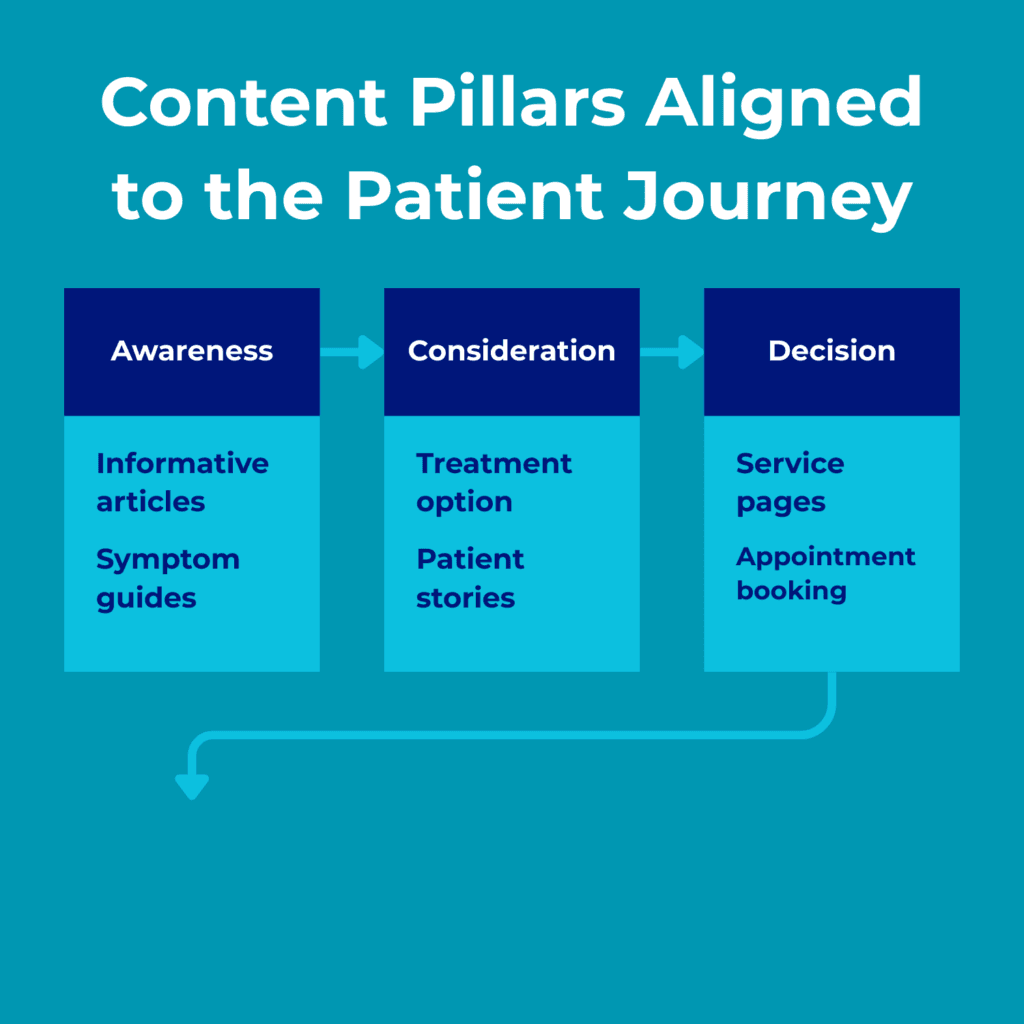
Actionable content strategy in 2026 requires explicit alignment with the patient journey. Awareness-stage content prioritizes education and myth correction, enabling patients to recognize concerns without alarm or stigma. Consideration-stage content provides condition-specific explanations, professional perspectives, and ethical analyses that support comparative evaluation. Decision-stage content foregrounds trust signals—credentials, procedural clarity, FAQs, testimonials, and concrete next steps—facilitating informed commitment.
Consequently, content strategy must evolve from volume-based production to navigational intent. The objective is not maximal output, but maximal guidance.
High-impact content domains include:
- Evidence-informed patient education
- Condition-specific explanatory resources
- Preventive care and lifestyle contextualization
- Ethical critique of emerging trends and misinformation
- Reflective practitioner commentary
- Frequently asked questions derived from clinical interaction
While short-form video remains central to discovery, long-form assets—articles, podcasts, and comprehensive guides—continue to anchor authority and long-term trust.
An effective model employs content layering:
- Short-form media for awareness
- Long-form content for depth and credibility
- Evergreen resources for sustained discoverability
This structure undergirds a durable 2026 digital presence for healthcare and wellness professionals.
Section 5: Social Media as a Trust Amplification Layer
Social media platforms increasingly function as auxiliary trust-verification environments rather than primary conversion channels. Patients routinely assess consistency, ethical boundaries, and communicative demeanor prior to engagement.
Key evaluative criteria include:
- Coherence of message and professional values
- Adherence to ethical content boundaries
- Respectful, non-reactive engagement practices
- Educational substance over promotional emphasis
- Composure when addressing sensitive or controversial topics
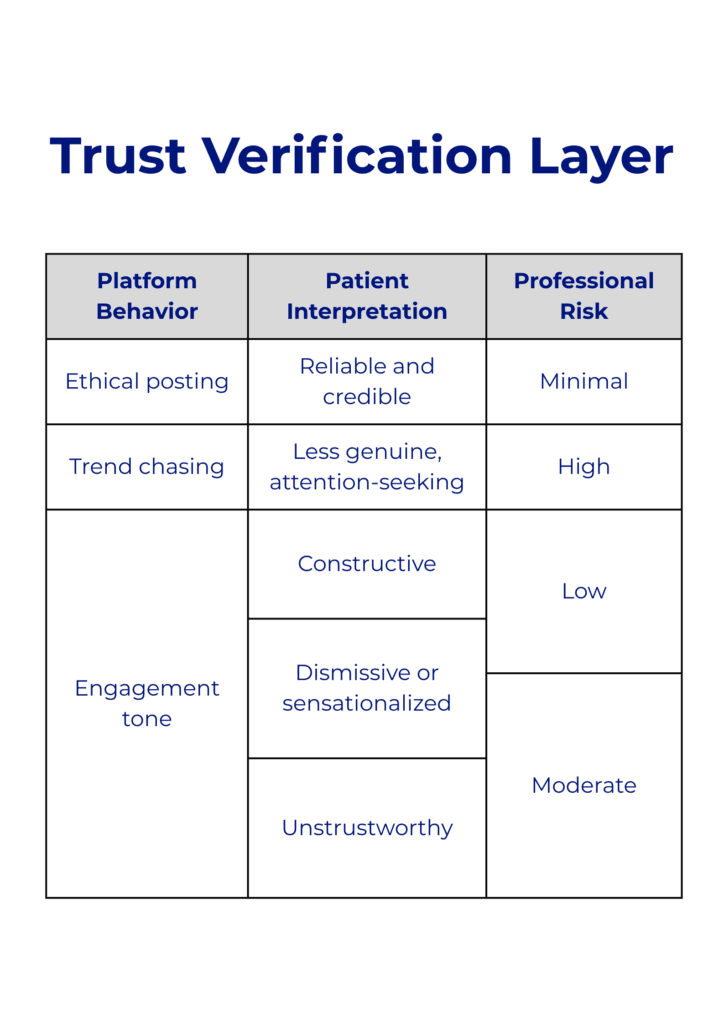
Accordingly, effective healthcare brands in 2026 will emphasize quality over frequency, contextual disclaimers, dialogic engagement without polemic, and restraint in trend adoption. Social interaction becomes an extension of professional care rather than a marketing tactic.
Section 6: AI, Automation, and Ethical Integration
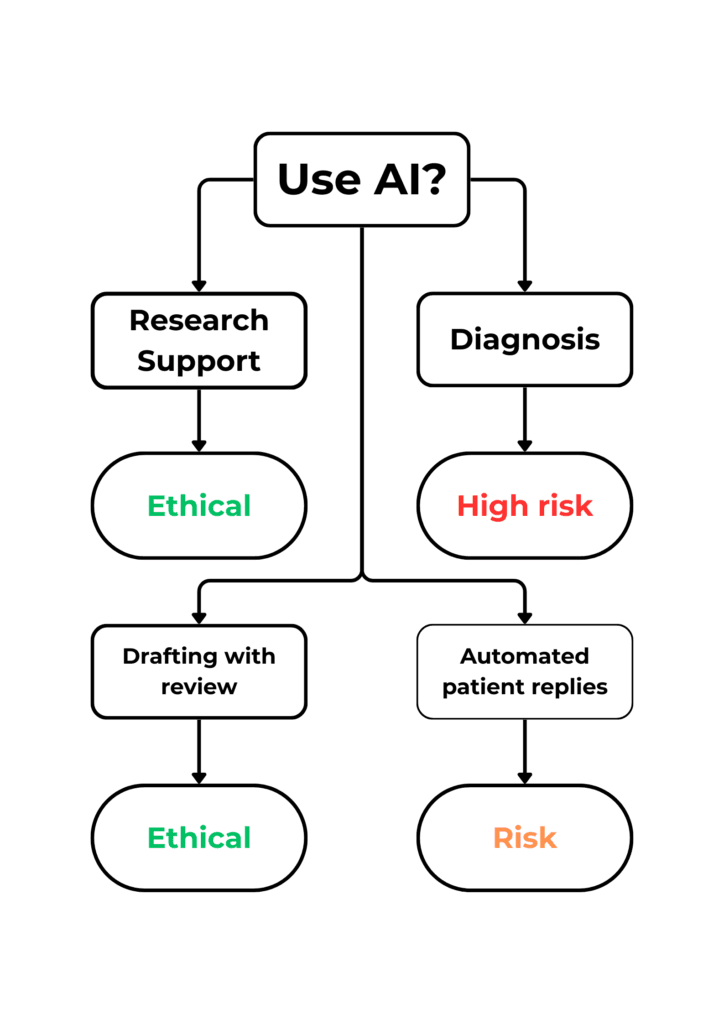
By 2026, artificial intelligence will be embedded across digital workflows. The central concern is no longer adoption, but governance.
Ethically grounded AI use entails:
- Employing AI for research synthesis, drafting support, and operational efficiency
- Preserving human oversight for all patient-facing material
- Transparent disclosure of AI-assisted processes where relevant
- Avoiding depersonalized automation in patient communication
- Maintaining empathic human judgment at all digital touchpoints
As detection mechanisms mature, low-effort generative output will be increasingly marginalized. Human insight, contextual reasoning, and professional accountability remain irreplaceable.
Section 7: Compliance, Privacy, and Reputation Governance
As digital visibility increases, so too do regulatory and reputational exposures.
A comprehensive 2026 digital presence strategy must therefore incorporate:
- Updated privacy policies aligned with applicable data protection regimes
- Explicit consent mechanisms and patient disclosures
- Secure infrastructure and baseline cybersecurity practices
- Active monitoring of reviews and public references
- Structured, professional response protocols
Reputation management thus shifts from reactive mitigation to proactive system design.
Section 8: Measurement That Reflects Trust
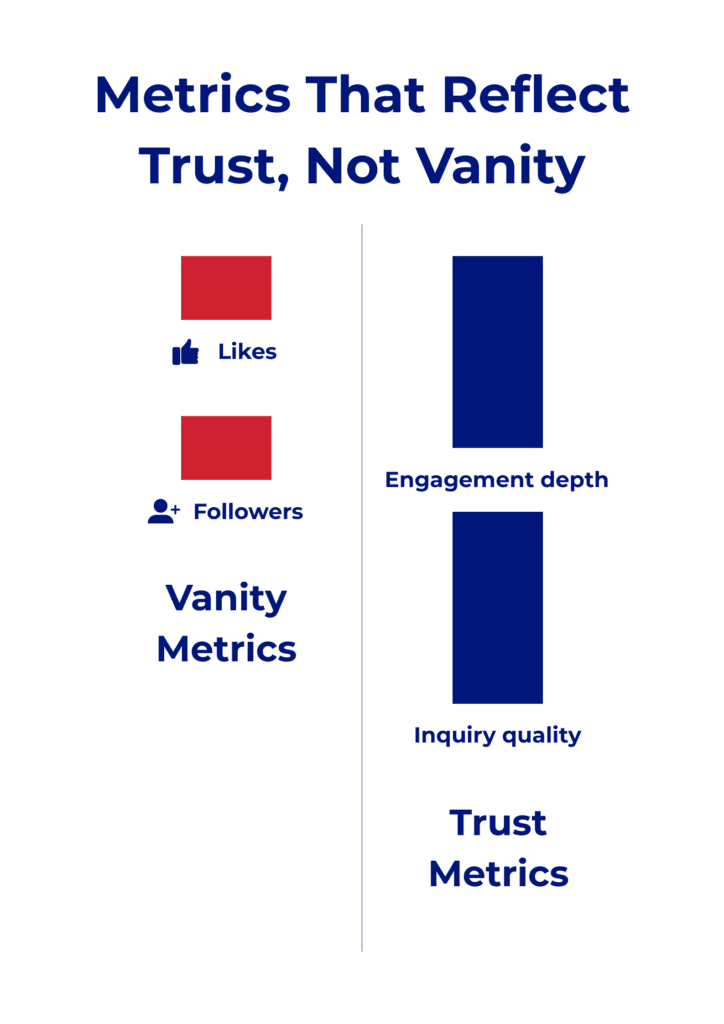
Surface-level engagement metrics offer limited insight into patient readiness or trust formation.
More informative indicators include:
- Relevance and quality of inbound inquiries
- Engagement duration with educational material
- Rates of return visitation
- Clarity and efficiency of conversion pathways
- Depth and substance of interaction
These measures more accurately reflect comprehension, confidence, and decision readiness.
Designing a Digital Presence Patients Can Trust in 2026
A short reflective audio summary exploring how trust, ethics, and authority define the 2026 digital presence for healthcare and wellness professionals.
Conclusion: Designing for Longevity Rather Than Trends
As the profession approaches 2026, healthcare and wellness practitioners are well served by undertaking a systematic review of their digital presence—auditing content integrity, compliance posture, trust signals, and strategic coherence. Such reviews should be institutionalized alongside clinical audits and continuing professional development.
A deliberate roadmap, rather than reactive participation in digital trends, enables alignment, resilience, and sustainable growth.
The 2026 digital presence for healthcare and wellness professionals must be engineered for durability. Platforms will evolve, algorithms will recalibrate, and technologies will advance. What remains invariant is the patient’s demand for clarity, credibility, and care.
Professionals who commit to ethical strategy, structured expertise, and patient-centered communication will not merely adapt to 2026; they will contribute to defining the standards by which digital healthcare credibility is judged.
See how your clinic appears to patients online — and start building digital trust today.
Book Your Free Online Presence Health Check
Your clinic’s online presence shapes how patients perceive your care.
Let’s review your website, social media, and digital visibility —
and identify how you can build stronger patient trust before year-end.